
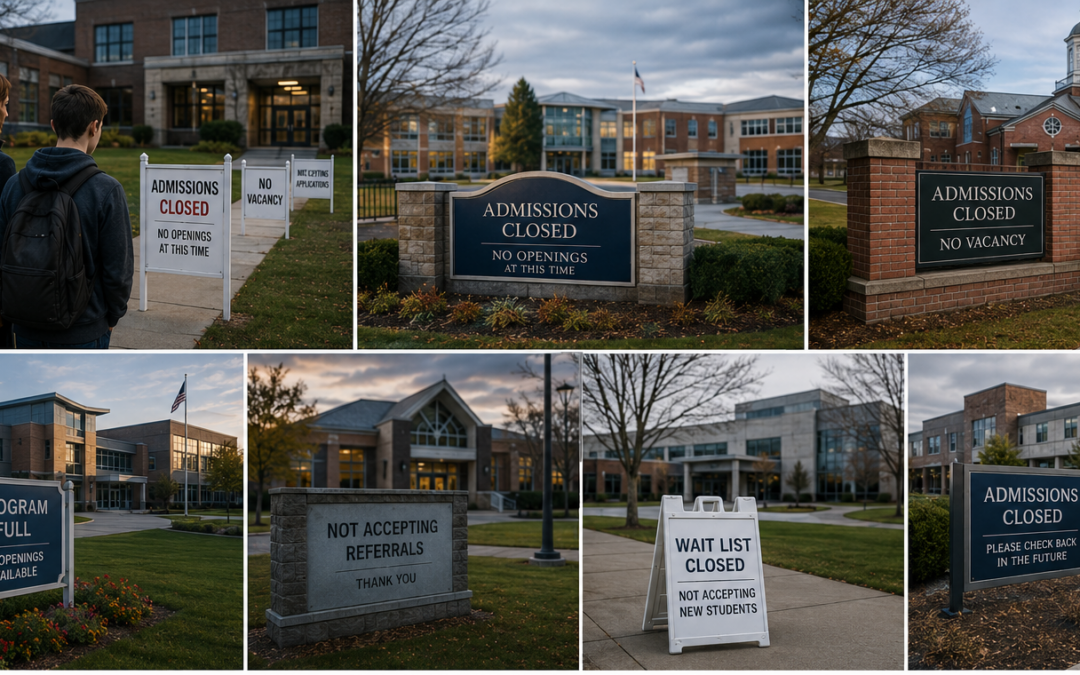
What happens when a student’s residential placement is terminated — and there is simply nowhere else to go?
That was the question at the heart of a recent ruling by BSEA Hearing Officer Sara Berman, Student v. Public Schools of Northborough and Southborough, BSEA No. 25-04230 (November 29, 2024). My office represented the student’s parents, and I am pleased to share this important decision.
The Situation
The student is a young man with Autism, OCD, and Intellectual Disability whose needs require around-the-clock support. He had been placed at the New England Center for Children (NECC) for several years. In the summer of 2024, NECC terminated his enrollment due to the severity of his behaviors. Despite sending referral packets to 30 programs across 17 states, the District could not identify a successor placement. In the interim, the District offered up to 15 hours per day of home-based services.
The student’s IEP called for a 24-hour, 365-day residential program with awake overnight staff, stating explicitly that these supports were “critical in maintaining his safety and ensuring his progress.” We filed a hearing request and sought a stay-put order requiring the District to honor that level of coverage.
The Legal Question
The stay-put rule requires that during a due process dispute, a student remain in the “then-current educational placement.” But what is stay-put when that placement no longer exists?
The District argued it had no obligation to replicate a residential program under these circumstances — the termination wasn’t its fault, it was actively searching, and the BSEA couldn’t order creation of a program that didn’t exist.
We argued that stay-put is a procedural guarantee, not an equitable remedy, and that the District was obligated to provide a comparable program regardless of how the gap arose.
The Ruling
Hearing Officer Berman agreed with us. Drawing on established BSEA precedent, she held that when a pre-dispute placement becomes unavailable, the District must provide a comparable program — one that matches, as closely as possible, the level and type of services the student’s IEP requires. The 15-hours-per-day offer fell far short. She ordered the District to provide 24/7 coverage, including awake overnight staff.
What This Means for Families
If your child’s residential placement is terminated, your rights do not disappear. The school district cannot simply scale back services while the search for a new program continues. Stay-put travels with your child, and comparability is measured against what the IEP actually requires.
One important practical lesson from this case: act early. Stay-put protections are triggered by the dispute resolution process. If your child’s residential placement is in jeopardy, do not wait to file.
This post is for informational purposes only and does not constitute legal advice. Results depend on individual facts and prior outcomes do not guarantee similar results in future matters. Contact my office if you have questions about your child’s rights.